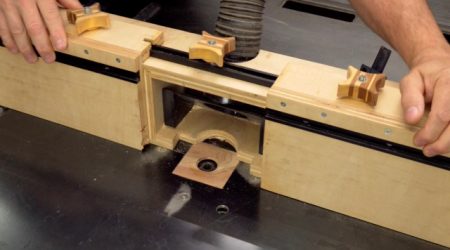
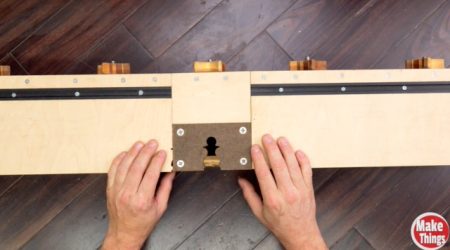
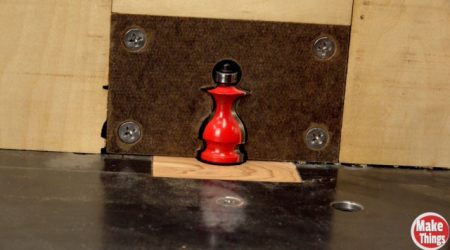
keeping support as close to the cutter as possible.
Why Router Fences Look So Complicated
Router fences are different from almost every other fence in the shop. They split in half, have adjustable openings, removable faces, tracks, and a dust collection port. At first glance, they can seem unnecessarily complicated.
But those features all solve the same problem. The closer support can be kept to the router bit, the cleaner, safer, and more consistent the cut becomes. Once you understand that idea, the entire router fence starts to make sense.
In this video, we explore how dust collection, split fences, removable faces, and accessory tracks all work together to improve cut quality and control.
Pencil lines create a zone of interpretation.
Knife lines create a physical reference.
What This Video Covers
Why router fences are different from table saw and bandsaw fences
How dust collection revealed a cut-quality problem
Why split fences reduce tear-out
How router fences work like the mouth of a hand plane
How removable faces improve profiled cuts
Why accessory tracks are useful for featherboards and stop blocks
The common design principle behind modern router fences
The purpose of nearly every router fence feature is to keep support as close to the cutter as possible. Dust collection, split fences, removable faces, and accessory tracks may seem unrelated, but they all contribute to cleaner cuts, better control, and safer routing.
Zero clearance always wins, especially with router bits
Want to know exactly why features exist in common router fences?