
What Is Climb Cutting?
Published August 11th, 2026
When It Works, When It Doesn’t
and How to Do It Safely
and How to Do It Safely
Climb cutting is one of the most debated techniques in woodworking. Some woodworkers use it to get cleaner cuts and reduce tearout, while others will tell you to avoid it completely. The reason for the disagreement is simple: climb cutting changes the way the router bit interacts with the wood, and if you aren’t prepared for it, the router can suddenly pull itself in the direction of the cut.
But climb cutting isn’t simply good or bad. There are situations where it can be useful, particularly when you’re dealing with difficult grain or trying to prevent tearout. The important part is understanding what climb cutting is, why it behaves differently from a conventional cut, and how to keep it under control.
In this guide, we’ll look at how climb cutting works, when you might want to use it, when you shouldn’t, and several ways to make a climb cut more controlled and predictable.

Free workshop guide
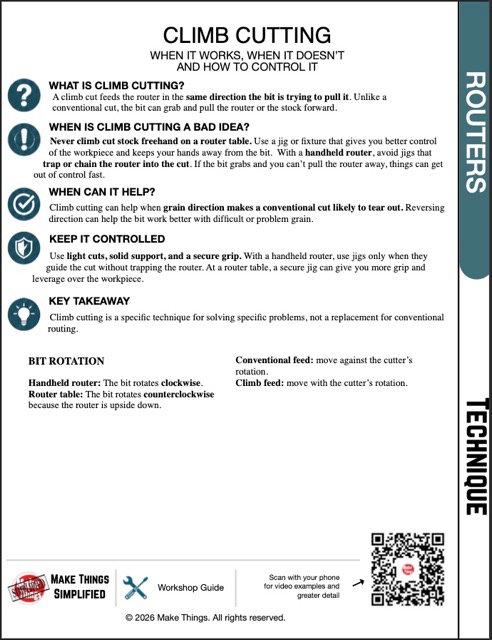
Download the free Climb Cutting Workshop Guide for a quick reference you can keep in the shop. It covers the main ideas from this lesson, including conventional vs. climb cutting, trouble grain, when climb cutting can help, and when it’s better to avoid it.
VIDEO CHAPTERS
Click any image below to jump to that part of the video.
1. What is climb cutting?
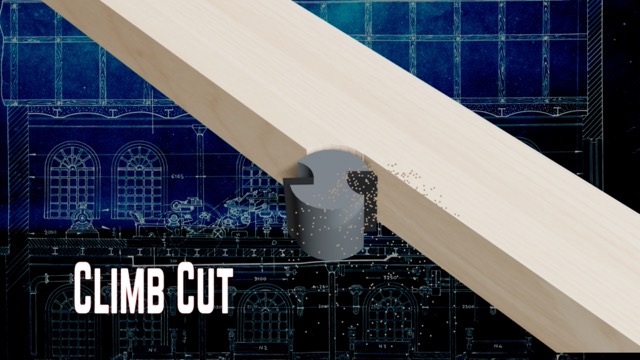
Climb cutting is when you move the router or workpiece in the same direction the bit is trying to pull it. That’s the opposite of a conventional cut, where the bit is pushing back against the direction you’re feeding.
That difference matters because a climb cut can feel completely different in your hands. Instead of the router resisting you, the bit can grab and pull itself forward through the cut.
With a handheld router, the bit spins clockwise when you’re looking down at it. On a router table, the router is upside down, so the bit spins counterclockwise when you’re looking down at the table.
A conventional cut goes against that rotation. A climb cut goes with it.
That’s the basic idea. Once you understand which way the bit is trying to move the router or workpiece, the rest of climb cutting starts to make a lot more sense.
CLICK IMAGE TO WATCH THIS CHAPTER ON YOUTUBE
2. Benefits of Climb Cutting
So why would you climb cut in the first place? The biggest reason is tearout.
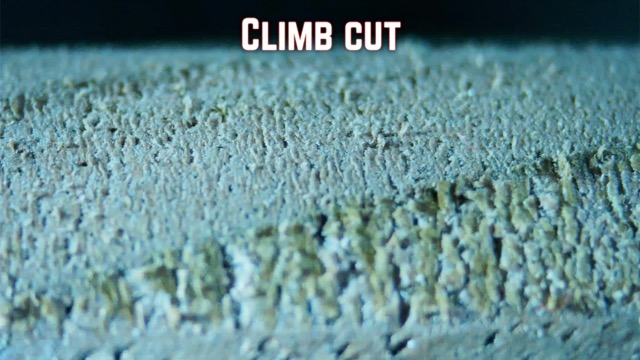
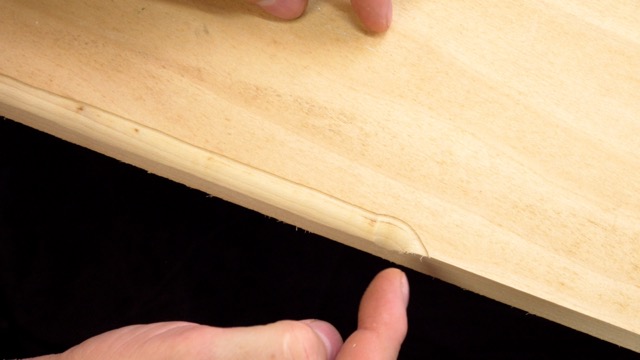
Wood grain doesn’t always cooperate with the direction you need to route. Grain can change direction along the same board, and when the router bit starts lifting those fibers instead of cutting cleanly through them, pieces can tear away and leave a rough or damaged edge.
A climb cut lets you approach that problem grain from the opposite direction. By changing the direction of the cut, the router bit can work with difficult or changing grain instead of continuing to lift and tear the fibers.
That can mean less tearout and a cleaner surface, especially in areas where a conventional cut just isn’t giving you the result you want.
Climb cutting isn’t about replacing conventional routing. It’s another option you can use when grain direction is working against you and you need a cleaner cut.
CLICK IMAGE TO WATCH THIS CHAPTER ON YOUTUBE
3. When Is Climb Cutting Wrong?
Climb cutting becomes a problem when the router or workpiece has too much freedom to move if the bit grabs. Because the cutter is pulling in the same direction you’re feeding, things can get out of control fast if you don’t have a way to pull away from the cut.
With a handheld router, be especially careful with jigs that trap or restrain the router. If the bit grabs and the jig keeps the router locked into the cut, you can’t simply pull away and regain control.
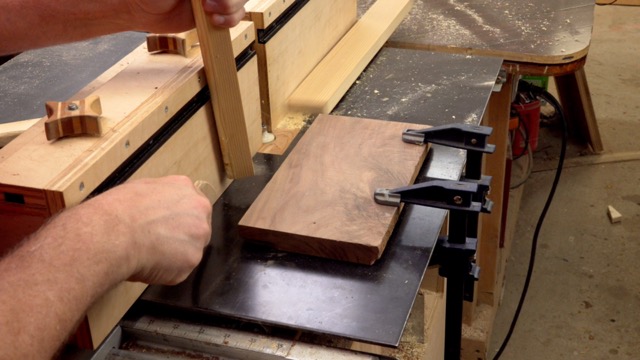
A router table has a different problem. The router is fixed, which means the workpiece is what can get pulled through the cut. Never climb cut stock freehand on a router table. Without a jig or fixture giving you positive control, the bit can grab the wood and accelerate it very quickly.
Heavy or deep climb cuts make matters worse because the more material the bit engages, the stronger that pulling force can become.
The big thing to remember is that conventional routing is still the normal way to make a cut. Climb cutting isn’t something to use casually just because you can.
CLICK IMAGE TO WATCH THIS CHAPTER ON YOUTUBE
4. When Is Climb Cutting Okay?
Climb cutting can make sense when you’re taking a light, controlled cut and you have a good reason for changing direction, usually because the grain is giving you trouble.
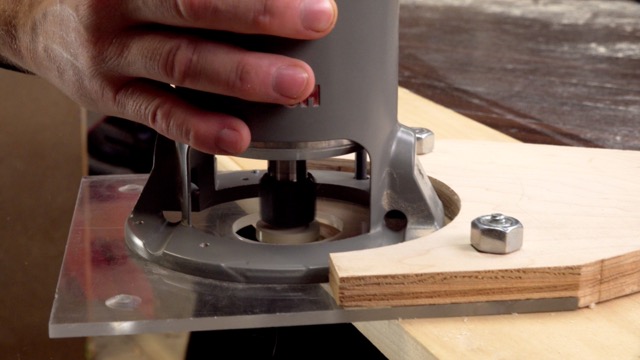
With a handheld router, the important thing is being able to stay in control and pull away from the cut if the bit grabs. A jig can help guide the router, but it shouldn’t trap it in the cut.
At a router table, a secure jig or fixture can make a big difference because it gives you more grip and leverage over the workpiece. That extra control is what makes a light climb cut much more manageable.
The key is that everything has to stay predictable and controlled. Light cuts, solid support, and a secure grip give you a much better chance of getting the benefit of climb cutting without letting the bit take over.
Climb cutting is most useful when you’re using it for a specific reason, not just because it’s another direction you can feed the wood.
CLICK IMAGE TO WATCH THIS CHAPTER ON YOUTUBE
5. Conclusion
Climb cutting isn’t something you need for every routing job, and it shouldn’t replace a conventional cut. But that doesn’t mean it’s a technique you should automatically avoid either.
When difficult or changing grain starts causing tearout, changing the direction of the cut can sometimes give you a much cleaner result. The important part is understanding why the router behaves differently during a climb cut and making sure you have enough control to deal with that pulling force.
Keep the cuts light, make sure the router or workpiece is well supported, and use a jig or fixture when the setup calls for one.
The goal isn’t to make climb cutting your new normal. It’s to understand when it can solve a problem, when it can create one, and how to tell the difference.
CLICK IMAGE TO WATCH THIS CHAPTER ON YOUTUBE
Support Rob
If these videos and workshop guides have helped you in the shop, there are a couple of ways you can help support future Make Things projects and keep these resources free.
Tip Jar
If you’d like to help support future Make Things projects and keep these workshop guides free, you can leave a tip here.
Become a Patron
Support Make Things on Patreon for project updates, behind-the-scenes extras, and other ways to follow along with what I’m working on.