The Real Reason Your Woodworking Joints Are Sloppy
June 11th, 2026
Most woodworking mistakes happen before
the saw ever touches the wood.
Why layout matters
Most woodworkers think sloppy joints are caused by a bad saw setup or a bad cut. In reality, problems with accuracy begin earlier during layout.
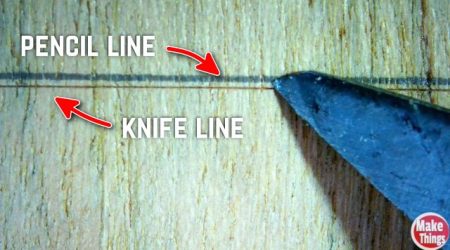
Every mark on a board creates a decision. Should the blade cut on the left side of the line, the right side, or directly through the center? The thicker the mark becomes, the more interpretation is required.
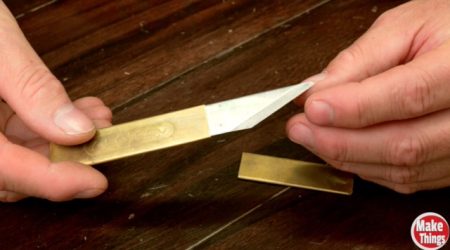
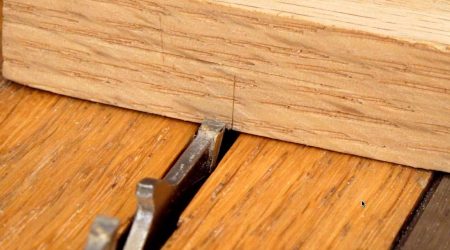
Marking knives solve this problem a little differently. Instead of leaving a visible line, they create a physical reference that tools can be placed against. This makes it easier to understand where to cut and makes it easy to duplicate.
Pencil lines create a zone of interpretation.
Knife lines create a physical reference.
The saw wasn’t my problem. The pencil wasn’t my problem. The problem was interpretation. Once I stopped asking myself where to cut and started creating marks that answered the question for me, my accuracy improved dramatically.
Physical references require less interpretation.
Want to see the demonstrations, microscope footage, and side-by-side comparisons?